


Attract Users
Send powerful and engaging multimedia messages to enhance the visual effect, and impress your audience.
Overcome Character Limits
Go beyond traditional character limits to deliver richer text-and-image content, with support for high-quality images up to 300 KB per message, showcasing every detail with a professional look and feel.


Increase User Engagement
By combining text and images in a single message, you can present product details more clearly to users, effectively improving both communication efficiency and user engagement.
Status Tracking
With detailed MMS delivery status queries and delivery statistics, you can clearly understand the performance of each message and gain accurate data insights to optimize your messaging strategy.



Use Cases
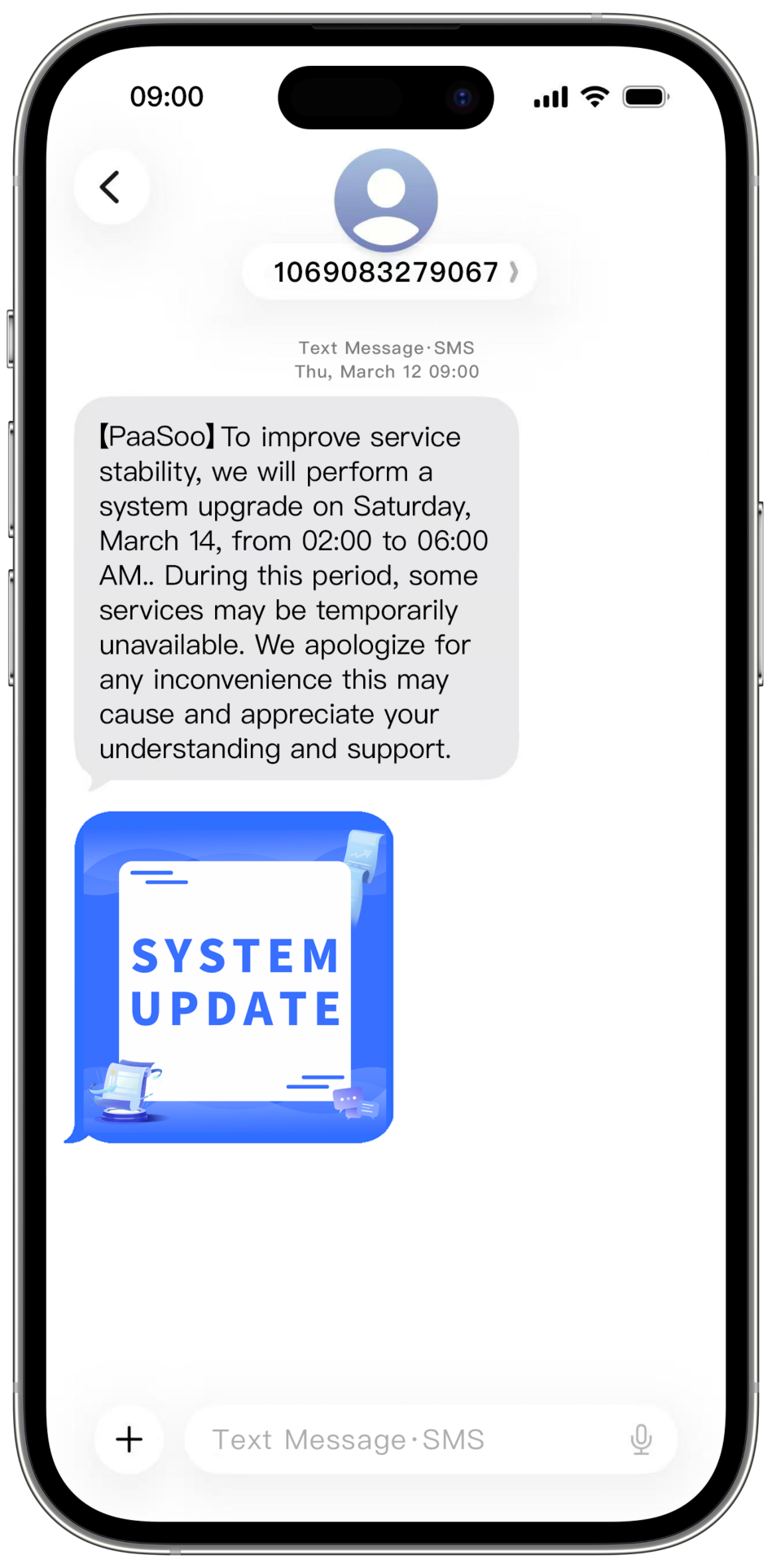
Notification
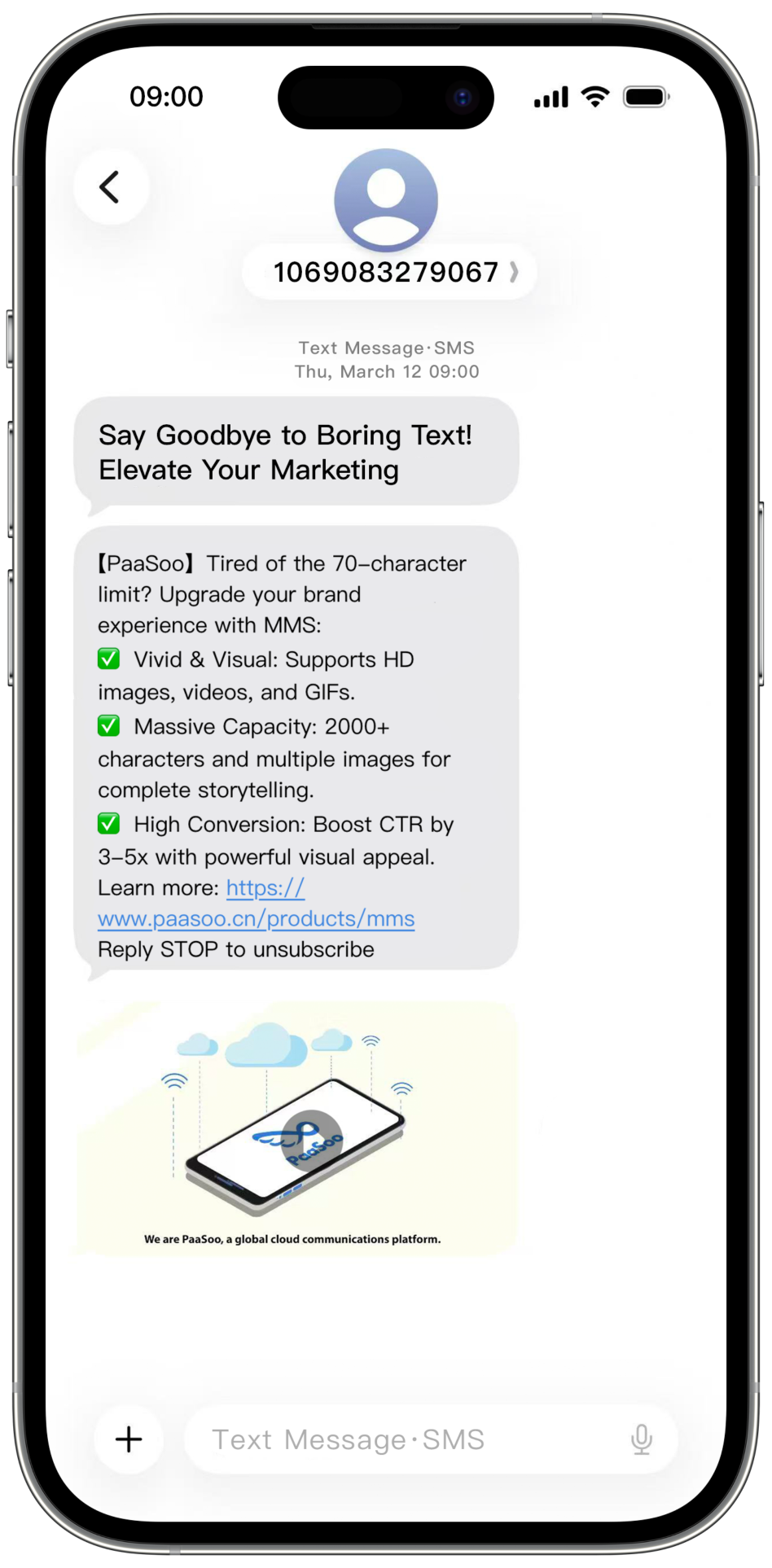
Product Promotion
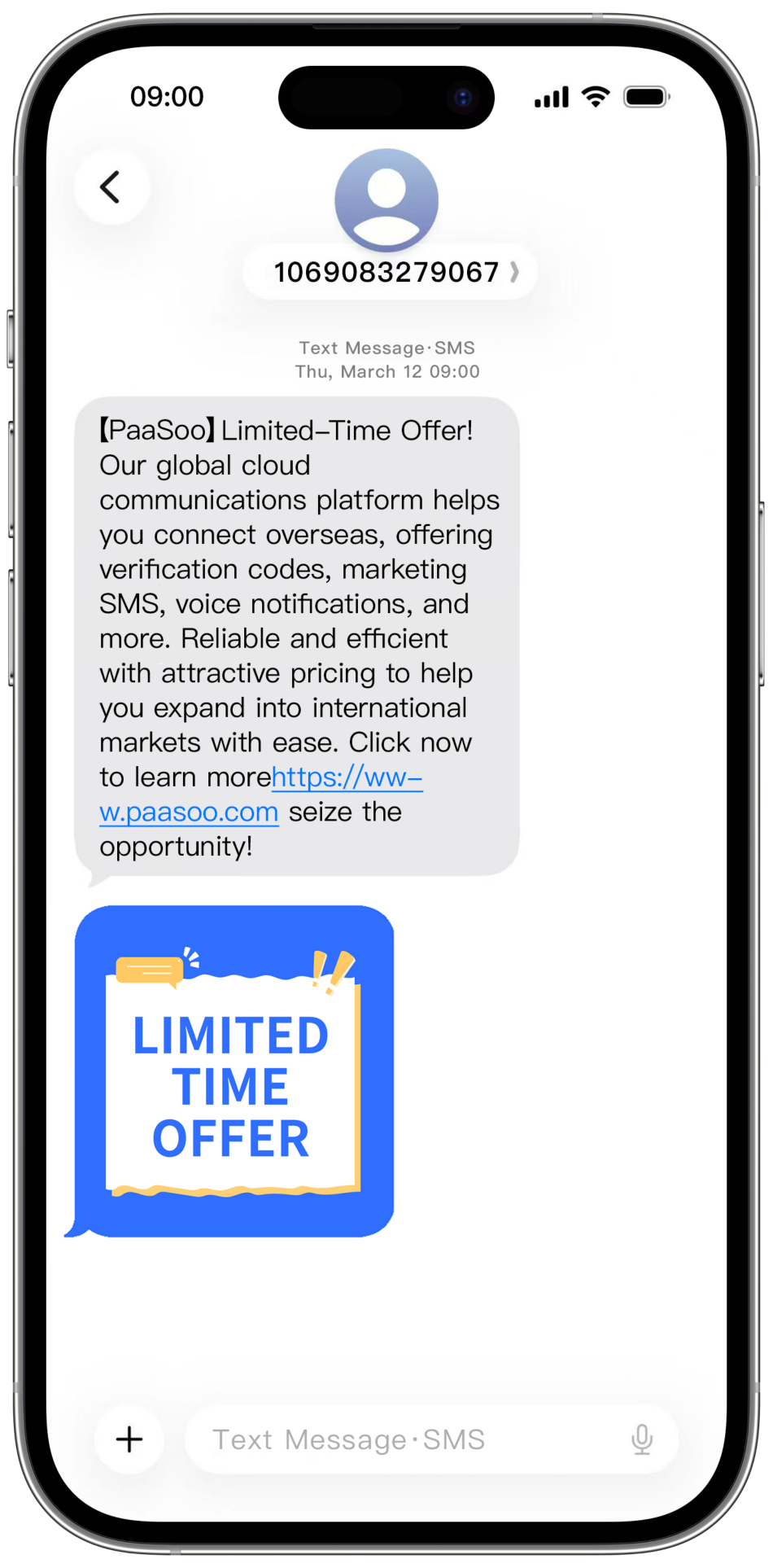
Marketing Campaign


API Link
All PaaSoo services are accessible using either HTTP or HTTPS. However, for security reasons, we highly recommend all our customers to use the HTTPS protocol.
- Java
- PHP
	import org.apache.http.HttpEntity;
	import org.apache.http.NameValuePair;
	import org.apache.http.client.entity.UrlEncodedFormEntity;
	import org.apache.http.client.methods.CloseableHttpResponse;
	import org.apache.http.client.methods.HttpPost;
	import org.apache.http.impl.client.CloseableHttpClient;
	import org.apache.http.impl.client.HttpClients;
	import org.apache.http.message.BasicNameValuePair;
	import org.apache.http.util.EntityUtils;

	import java.io.IOException;
	import java.io.InputStream;
	import java.util.ArrayList;
	import java.util.HashMap;
	import java.util.List;
	import java.util.Map;

	/**
	 * Java code example for SMS HTTP API
	 * <p>
	 * MMS API
	 * <p>
	 * Based on Apache HttpClient 4.X
	 * <p>
	 */
	public class JavaSmsApi {
		// Encoding format. UTF-8 is uniformly used for sending encoding
		private static String ENCODING = "UTF-8";

		private static String CONTENT_TYPE = "application/x-www-form-urlencoded";
		// MMS sending URL
		private static String URI_GET_SEND_MMS = "https://api.paasoo.eu/mms";

		public static void main(String[] args) throws Exception {
			// Parameters
			String key = "********";
			String secret = "********";
			String from = "********";
			String to = "********";
			String text = "********";
			String subject = "********";
			String attachment = "********";

			/**************** MMS sending invocation example *****************/
			System.out.println(JavaSmsApi.getSendMms(key, secret, from, to, text, subject, attachment));

		}

		/**
		 * MMS sending
		 *
		 * @param key         API Account
		 * @param secret      API Password
		 * @param from        SenderID
		 * @param to          Destination number
		 * @param text        Message content
		 * @param subject     Message subject
		 * @param attachment  MMS image URL (Requires the URL of the image uploaded to our server)
		 * @return json       Formatted string
		 * @throws Exception
		 */

		public static String getSendMms(String key, String secret, String from, String to, String text, String subject, String attachment) throws Exception {
			Map<String, String> params = new HashMap<String, String>();
			params.put("key", key);
			params.put("secret", secret);
			params.put("from", from);
			params.put("to", to);
			params.put("text", text);
			params.put("subject", subject);
			params.put("attachment", attachment);
			return post(URI_GET_SEND_MMS, params);
		}
		/**
		 * Generic POST method based on HttpClient 4.X
		 *
		 * @param url         Request URL
		 * @param paramsMap   Submitted <Parameter Value> Map
		 * @return            Response
		 */
		public static String post(String url, Map<String, String> paramsMap) throws Exception {
			CloseableHttpClient httpClient = HttpClients.createDefault();
			CloseableHttpResponse response = null;
			InputStream is = null;
			try {
				List<NameValuePair> params = new ArrayList<NameValuePair>();
				for (Map.Entry<String, String> param : paramsMap.entrySet()) {
					NameValuePair pair = new BasicNameValuePair(param.getKey(), param.getValue());
					params.add(pair);
				}
				String str = EntityUtils.toString(new UrlEncodedFormEntity(params, ENCODING));
				HttpPost httpPost = new HttpPost(url + "?" + str);
				httpPost.setHeader("Content-Type", CONTENT_TYPE);
				response = httpClient.execute(httpPost);
				HttpEntity entityResult = response.getEntity();
				String result = EntityUtils.toString(entityResult);
				return result;
			} catch (Exception e) {
				e.printStackTrace();
			} finally {
				if (is != null) {
					try {
						is.close();
					} catch (IOException e) {
						e.printStackTrace();
					}
				}
				if (response != null) {
					try {
						response.close();
					} catch (IOException e) {
						e.printStackTrace();
					}
				}
				if (httpClient != null) {
					try {
						httpClient.close();
					} catch (IOException e) {
						e.printStackTrace();
					}
				}
			}
			return null;
		}
	}
MMS Price Inquiry
Please contact us for more details
